
Berlin RPG Aufbau
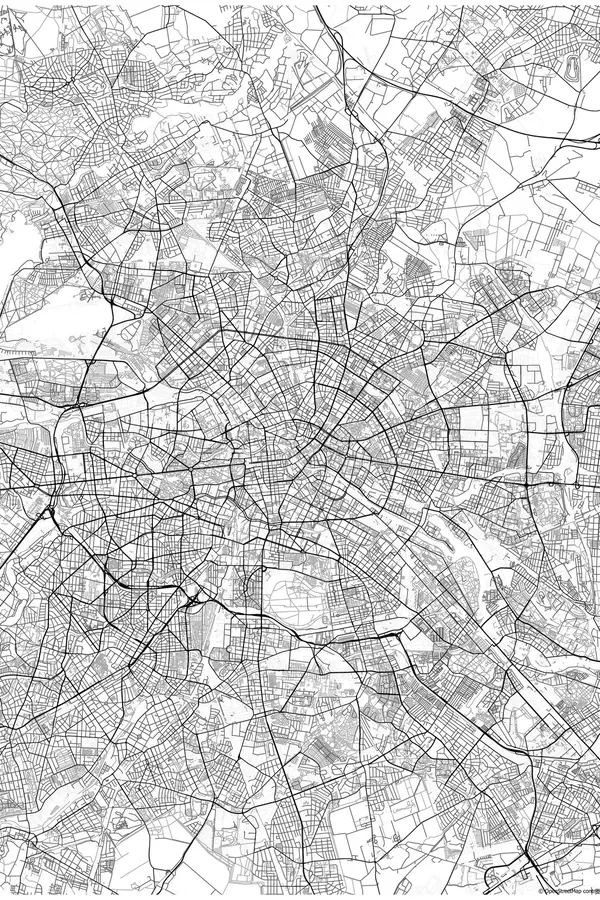
This is a work of mathematics, poetics, and hermeneutics meant to dissolve the artificial boundaries between all of them.
Teil I. Einleitung
zur Theo Rockas
September 27th, 2026. Morgens–Mittag. The art commune by the Spree in Moabit.
The song La Bohème drifts through the scratchy monospeaker of an old computer on a low resolution monitor. Light pours in through the morning window; glowing plants sit on worn pianos, dancing in white sunglow. An American girl perches on the handcrafted woodslat window bench, her bare legs dangling while rolling a cigarette. Soft hammering from nearby construction is heard immediately underneath us right by the river. Sunlight and wind render the tobacco smoke into spiraling ghostly vortices. Green willows swoop down across the water. German, English, and Russian are tossed around, contrasting the French on the music speaker. Earlier, in the sleeping area, an Israeli girl from Tel Aviv screams at her therapist over a telehealth call. She is now aggressively minding her own business and doesn’t seem to be in the mood to talk. Cakes and drinks lie drying on the kitchen table — a fig cake and a chocolate fruit cake greet me next to morning bottles of white wine. As I wake over the next half an hour, I slowly encounter the new people I met the past few days. People come and give each other hugs.
In the music room the people come and go, and I hear conversation.
“When did you go to bed last night?”
“Well I got back early around 3. I slept for a few hours 3–4. I feel alright actually.”
“Guten Morgen. Schöne Morgen.”
We are all dressed for the river excursion. We lug speakers, synthesizers, and guitars in brown baggy khakis and floral linen fits. The beginning of my art residency in Moabit coincides with the successful election of die Linke. The city is uneasy about this fact. Almost all the large campaign posters around this area were vandalized with goat horns and eye crosses, especially on the SPD, CDU, and the Grüne Partei.
Just a few centuries ago, Moabit was the place of refuge for the French Huguenot. We are running from a new sort of ambiguous danger, one only some of us here can pin down in terms of life and death, but that doesn’t make it any more or less real. It is not so different at the Petersburg Art Space as it was long ago, when this building was still a printshop and soap factory. It is now instead a factory for manufacturing aesthetics and the degeneracy of youth. It just happens that the place where people like me produce our best creative work often overlaps with where the frequenters of multi-person bathroom dens in East Berlin nightclubs normally reside, where the ritualistic Berliner sacrament of MDMA crossed with ketamine before the techno rave is consummated by melancholic lesbians awaiting the second coming of Timothy Leary.
My new friend, roughly my age, chainsmokes his way through house chores, something in common with almost all the Russian refugees of the residency. He says he left a few years ago through Tbilisi, Georgia. He spent many years around the syncretic Christian-Buddhist literary-occultist circles, the ones that gave rise to Putin’s theocratic authoritarian regime and the Ukraine war. Incidentally, a lot of viscerally depressing contemporary Russian literature (of the Chernukha school) also comes from the same group of people.
“There’s this famous novel from our group. It’s very screwed up,” he started, “where a boy eats his own pimple pops to survive in an auto-cannibalistic way.” He once saw “wealthy girls adorned with fur coats and naive, confused looks, walking by an anti Ukraine-war protest in the Red Square, asking the police what people were protesting about.”
“That was the moment I decided to get the fuck out of Russia.” He told me.
Like me, home is where his books are, and he carries a treasured collection of first editions of post-Soviet literature. I tell him I will get him a signed copy of Ginsberg’s Howl, USA the next time I come back to Europe. “I would cut off a toe for that. What books would you like in exchange?”
Life in Berlin is international. Many are Americans, Eastern Europeans, and Middle Easterners fleeing their cultural, political, and economic impoverishments. They meet in a third place, called Berlin, the capital of Europe. Euros are jestingly referred to as Deutschmarks. The nightclubs serve no different a function from Rick’s in Casablanca for those who made their way across the newly erected borders in the twilight days of Pax Americana.
The tension between native Germans, immigrants, and internationals runs high despite the postmodern cultural efforts to suppress the current Reichstag fire. I speak German to the Turkish and the Germans. I am always received well by the Turkish. The Oriental immigrants all tell me that this place is imploding, and that I should never move here. Sometimes I am received extremely well by the Germans when I speak German. Sometimes they respond in English and even with scorn when I am not idiomatic with my phrases in certain regions of Potsdamer Platz. Getting a library card at the Staatsbibliothek Berlin is almost impossible unless you demonstrate to the librarian that you speak German. There are not many East Asians here, so my identity among the populations remains indefinite other than “American”. In Turin, my local moniker was “l’amico americano”. Here, I am not so much a friend.
“They don’t really hate the Asians here. You are an unknown quantity” says my Turkish driver.
Though despite all of this mess, the ruthless rule-binding circuits of Germans, the recklessness of our youth, and the abject nihilist social chasm underneath us, Berlin is truly the cultural and political capital of Europe. There is not a single subway station, street, or park without public references to Kultur (high culture) whether it be an opera, gallery, or play. Everything is clean and habitable. And, there is not a single district without an inspired, albeit immature, expression of youthful artistic outburst. Poetry and literature clubs for young people run along warmly lit orange-red cafes on lukecold autumn evenings. Berlin has been destroyed many times, but the spirit of the city sustains it. If there is a god of the city, it is certainly the name, concept, and hallowed ground of the location as witness to its history.
Last night, a room of Conservative Germans, Hippie Bohemians, Englishmen, High Society Opera-goers, and abject Degenerates gathered like me to attend Mittwoch aus Licht by Karlheinz Stockhausen at the Deutsche Oper Berlin on Richard Wagner Straße. Even Theo is cautious of Nikita, the Russian. He doesn’t trust the dangerous untetheredness of sound artists.
There is no good way to describe the Mittwoch/Licht experience, only that it is a six hour long electro-acoustic German space opera based on a Sufist Mormon cosmography, resembles a masonic ritual, and contains a helicopter quartet interlude where the players play in four separate helicopters with designated rotor speeds as part of the score while in the sky. I cry when they lift off in Shepard tones. Michael, Eve, and Lucifer create the entire universe, and the audience becomes part of a cosmic ritual as witness. Licht is probably the closest thing we have towards an actual Gesamtkunstwerk. Although Stockhausen controversially claimed once that 9/11 was the greatest most complete work of art ever accomplished.
“The theme of Mittwoch is love.” — from Act I
The Germans and the rest of us probably experience some sort of loving ego dissolution during the performance; then we all return to our petty lives after it’s over and act like we don’t know each other.
AfD banners line certain streets of the government district by Unter den Linden and in the former East German sections that seem more desolate or “ethnic”, for instance Görlitzer Park. I actually find Görlitzer Park to be quite safe, except some occasional harassment from crack addicts. I walk by it every night from my temporary work space at the Foresight Institute Berlin. But they aren’t that dangerous. The AfD blue is unmistakable. The right claim “Sicherheit und Ordnung”. The left have no idea what they are organizing around except the obvious. A Hannoverian girl with Polish ancestry confesses to me “there’s no room for centrists other than the completely useless SPD. I am anti-fascist, but I’m not die Linke. They are just confused.”
Our cigarettes light the nightclubs. We sit in taxis and rideshares, talking of Mark Fisher, listening to Portishead. Mornings begin with headaches.
But right now I am basking in the sun, as I sit by a few girls and the Russians on the Spree underneath our converted industrial factory flat. Mild house music drifts from our outdoor speaker across the water. On the other side of the river, respectable middle class people jogging in the green park near modern glass contrast against our graffitied earl grey and light-brown brick coloured quarters. We set up a full electronic band on the ledge, committing acoustic terrorism against the law-abiding citizenry. The Germans are probably used to this crap and price us in as leftists or something. A photographer comes to get pictures of the band while local strangers come to interpretively dance and host German rap battles to our improvisations.
I take a break from the synth and music pad.
An Irishman and I bond. We drink champagne from the bottle and from cappuccino cups; it’s called French coffee.
Teil II. Ad Oculos
zur Bryce Hidysmith
“There is no royal road to aesthetics. Art cannot avoid the problem of its representation.”
“By our nature, we are incapable of comprehending objectivity even if we are presented with it. So, without a direct line to objectivity, we are limited to hypothesizing about it, rather than actually knowing what is good from an objective vantage.”
You walk by the Spree on a Friday and must abandon language for a moment, because it feels quite limiting to think in that way. In fact, it’s comforting to dissolve the life around into what is immediately real about the place. What does it mean to be real?
I am trying to figure out what things are and where the boundaries of objects lie without necessarily giving them names. This helps because the words in the language I hear around me, in reference to things they represent, are not what I usually call that thing in my own tongue. A different language may perhaps call something something else or partition it differently entirely. So how does one partition the world? How does one specify the contours of a willow tree, its weeping leaves, the bark, where each discrete part begins or ends? How do we enumerate the seemingly infinite layers or ways of partitioning?
Russell’s paradox begins with an impossibility: that the set of all sets which do not contain themselves lands in a contradiction, for then that set must contain itself but also does not contain itself.
- membership
- non-membership
Russell takes this paradox from the work of Cantor. Cantor was able to show there are uncountable infinities and the uncountability of real numbers through the diagonalization argument. What if we were able to always construct a string of symbols that is definitely not contained within a set of infinite strings which should contain everything? Is then the set enumerable? No, because in that case, it would have enumerated every element of the set, but there is a string discovered not in that set.
- diagonal digit \(x_{nn}\)
- constructed digit \(y_n\)
Suppose \((0,1) = \{x_1, x_2, x_3, \ldots\}\).
| \(x_1\) | 0. | \(x_{11}\) | \(x_{12}\) | \(x_{13}\) | \(x_{14}\) | … |
| \(x_2\) | 0. | \(x_{21}\) | \(x_{22}\) | \(x_{23}\) | \(x_{24}\) | … |
| \(x_3\) | 0. | \(x_{31}\) | \(x_{32}\) | \(x_{33}\) | \(x_{34}\) | … |
| \(x_4\) | 0. | \(x_{41}\) | \(x_{42}\) | \(x_{43}\) | \(x_{44}\) | … |
| ⋮ | ||||||
| \(y\) | 0. | \(y_1\) | \(y_2\) | \(y_3\) | \(y_4\) | … |
Contradiction. \(\therefore\ \mathbb{R}\) is uncountable.
Take an infinite list of infinitely long decimal numbers above for instance.
The trick is simple. In the case of the real numbers, if for each element on the diagonal, we construct a new real number by ensuring that each digit on the diagonal does not correspond to the current corresponding nth digit of the new number we are building, then we are guaranteed a constructed string that has not been already enumerated by the infinite list of infinitely long numbers. All the nth digits differ between our constructed digit and the diagonal string, meaning it cannot be contained in the set being enumerated. Even the infinity of real numbers between 0 and 1 is unenumerable in this example. This is easily seen with binary strings, where each digit value in the string is either a 1 or 0.
This is an “uncountable infinity”, with countability referring to the ability to map each element in a set to an ordering of the natural numbers \(1, 2, 3, 4, \ldots, n\). The pop-cultural reference for countable infinity and thus the notion of uncountable infinity is through the famous thought experiment of Hilbert’s Hotel (The Infinite Hotel Paradox), which meditates over the many strange and seemingly paradoxical qualities of infinity.
Using an equivalent method, the Entscheidungsproblem solution essentially states that a program cannot exist that can decide whether a program halts or not. This fact can be shown using the same diagonal argument. Asking the question about whether a program halts or not on a certain input is equivalent to asking what descriptions are acceptable in a given language. But just like Cantor’s argument with the uncountability of real numbers, we cannot decide this for all pairs of programs and inputs.
- halts
- does not halt
Suppose \(H\) is total and computable.
\[ D(P) = \begin{cases} \mathrm{LOOP} & \text{if } H(P, P) = 1 \\ \mathrm{HALT} & \text{if } H(P, P) = 0 \end{cases} \]\(D(D)\) halts \(\Longleftrightarrow\) \(D(D)\) does not halt.
No total computable \(H\) exists.
The specification of our reality, likewise, runs into the same problem. First, there exists no privileged ontology or infinite language, only vantage points from where one starts. There is not one language to master them all. We cannot actually countably enumerate where one thing ends and another one begins and in all the ways they could come together as larger objects composed of smaller ones.
The set of all possible languages over a finite alphabet is uncountable even though the set of finite symbolic descriptions is only countably infinite. Consequently, not every possible language can be individually specified through a finite description. However, this does not preclude a finite mathematical characterization of the entire collection: the power set of all finite strings is itself an example. The limitation is therefore not that descriptions cannot be described collectively, but that no finite encoding scheme can individually specify every member of an uncountable collection. Furthermore, even among countably many finitely described problems, decidability is not guaranteed, as the halting problem demonstrates. We are therefore constrained both by the expressive limits of finite symbolic systems and by the computability limits of procedures operating within them. Under these constraints, choosing a descriptive language necessarily involves choices of abstraction, even if those constraints alone do not establish the impossibility of an objective ontology.
Second question: Is a finitely described problem decidable?
- \(\displaystyle \Sigma^{*} = \bigcup_{n=0}^{\infty} \Sigma^{n}\)
- \(|\Sigma^{*}| = \aleph_0\)
- \(\mathcal{L} = \mathcal{P}(\Sigma^{*})\)
- \(|\mathcal{L}| = |\mathcal{P}(\Sigma^{*})| = 2^{\aleph_0} > \aleph_0\)
- \(|\mathrm{Desc}| \le \aleph_0\)
- \(|\mathrm{Alg}| \le \aleph_0\)
- \(|\mathrm{Desc}| < |\mathcal{P}(\Sigma^{*})|\)
- \(|\mathrm{Alg}| < |\mathcal{P}(\Sigma^{*})|\)
- \(\mathrm{HALT} = \{ \langle P, x \rangle \in \Sigma^{*} : P(x) \downarrow \}\)
- \(\mathrm{HALT} \notin \mathrm{DEC}\)
- \(|\Sigma^{*}| < |\mathcal{P}(\Sigma^{*})|\)
- \(\aleph_0 < 2^{\aleph_0}\)
I find myself slowly tuning back into my immediate surroundings in Moabit.
Nikita blows a ring of smoke from the rolled cigarette. He carries a pouch of tobacco wherever he goes. The light gray rings expand in concentric circles, again and again, from the center to the surrounding ring from within the circles themselves.
“It’s weird” I said. “The questions of my life don’t really have a singular answer or an objective frame. You see, I’ve got a solution about why I am in Berlin at one layer of abstraction, if you were to describe why I am here through a particular language of existing; the fact is I couldn’t come up with these ideas I’ve been working on recently anywhere else. Part of it was really needing to get out of Ann Arbor and America in general for just a bit. But at the same time, isn’t it a bit pretentious I do have to come to Berlin for that? But I wasn’t thinking about the travel very much either. I was just being and needed to be. But then maybe this being is also part of an act or a pretension? I could keep expanding or contracting the abstraction layer at which I ask myself the question of why I am in Berlin, expanding to all the other layers of possible descriptions for reality. I can keep enumerating entire worlds of possible explanations for why I’m here…. There’s an infinite regress of framings for any aesthetic structure, and they are all apt descriptions for what is going on. Vielen Dank. Ja Bitte. Espresso. Nein. Kein Zucker.”
Nikita shrugs heavily, takes another puff, and then looks at me with fatigue. He hasn’t slept for a few days. The outdoor pavilion at the Buchkantine in Moabit is filled with the weekly regulars. The very pretty and flirtatious blonde waitress I’ve encountered for the last week disappears into the store. A new person, a gruff bearded German waiter comes out. I haven’t seen him yet, but he seems a bit annoyed we were speaking in English and annoyed that he was taking our order. The late September wind was not quite chilly yet as it will be in two weeks so I take off my coat.
“Well, you can’t live like that. You just sometimes have to enjoy and be. The framing is purely relative; it’s pretentious in one world and it’s not in another. The rings cancel themselves out. You don’t need to give a shit about another person’s perspective on your decisions. Otherwise, there is a center which you will never reach. You know, I am still transfigured by Mittwoch aus Licht from the other day. I am still reeling from the aftermath a bit. It’s actually really similar to David Lynch’s Twin Peaks in some ways. There’s this impossibility of embrace between everyone in the show just like how it was with the opera. As you approach that true embrace, that penetrating moment, the very limits of that interaction just dissolve into noise again. The embrace never happens. Then, you must somehow cope with this noise, this uncertainty, and still try to embrace regardless. This simply becomes the opening to the next deeper target you know? The center always remains elusive.”
Nikita blows smoke again, and he coughs. He is sure he has the flu, but he owes me coffee.
“This is indeed what living feels like. Nikita, if I were actually to chase this black hole at the gaping center of existence, you will find me at the bottom of the Spree, driven to madness or death.”
“Hahaha. Please don’t end up there. Not yet. See, I am rather enjoying the immediacy of my situation. I am not even planning more than a few days in advance. There’s no chasing or planning here. I must simply live.”
The waiter spots us using English again. I generally don’t like speaking English to Germans who prefer to use their language, but I do find Billy Joel’s Vienna in the background rather ironic. I do not lose the fact that I am in Berlin, where some people can be snobbish about these things.
“Yes, but again, why the coffee here? Why the Spree, or the streets, museums, days spent walking stone streets? Why the gentle autumnal wind blowing amongst green-yellow-red trees and lamplights reflected against the river? We could make models of reality anywhere, but why Berlin? But I guess at some point there needs to be an instantiation. Some physical object or world needs to actually represent this abstract unfolding process we are describing. I wouldn’t have thought about much of this without the puff of your cigarette earlier, the political economy of this area, the people, or some architecture I was exploring around in this city all coalescing at once. I could only form my current perspective by taking in information from a new place. We may be going towards that empty hole at the center of the smoke, but in the end, there basically needs to be something as opposed to nothing even for reality to occur?”
“That’s right. But I don’t know how long this will all last. There is a housing crisis, all of the economic troubles happening from increasing housing prices. We will be choked to death. Soon there wouldn’t be any artists in the city, and the buildings will all gentrify.” He nodded slowly like a horse.
“I have more faith than you do. This place survived two world wars and the cold war. Somehow the culture never died. I mean you know what astounded me this week? This city is full of ghosts, it’s been destroyed so many times, but the art and thought somehow returns each time. There’s something about the resilience of the architecture and symbology of this place.”
“Yes, but this sort of collapse is different. It’s like a cold death of the universe. We are more choked out than anything.”
We sit in silence. Nikita puffs his rolled cigarette again and then coughs violently.
“I mean even this arbitrary act of smoking is just an aestheticized self-destruction towards the same black hole lying at the pit of existence. In that way, the cigarette also makes existence possible. There’s obviously the purely aesthetic layer to it and there is an aesthetic layer to literally everything anyone ever does. I mean, so are all the people taking completely random drugs without knowing what they are at the art commune. They are performing some sort of activity to instantiate their existence, even if it’s self-destructive.” I said.
“Right. And we are all secretly sustained by this sort of activity, just at different rates of self-destruction. At least I am. People simply need to be, despite knowing their activity is heading towards this hollow center which only gets filled at the moment of death. Sometimes you just need to stop thinking and trust that the thoughts are already complete. I think most people live that way. I guess people like us just can’t quit thinking. That kinda sucks.”
“Yes, it really sucks. What do you even do about it?”
He shrugs. Then continues.
“You just do. There was a point in my life where I thought about this extensively, but some part of this nihilism is paradoxically the need to live so that the moment becomes possible at all.”
“Thinking in itself is an activity which ends up nowhere right? There are faster and slower ways of dying. It seems no one can escape the actual fate here or the eventful moment when we have to confront that missing center. But, there are meaningful and aesthetic ways to die or confront reality, you might as well make art in the process and just be. I find myself always dancing around this center. No matter what I do. I suppose even in this conversation, I seek intellectual fulfillment. After a conversation like this, only somehow the real question and the main point never actually gets satiated. I’m not even able to often articulate what the point even is.”
“Yep. And sometimes I let this be and sometimes it’s just more conversation which will never actually get to the point because that point is impossible. So then you go in circles.”
He draws circles in the air.
“It really is impossible to make it through reality without a good sense of humour.” I remarked.
He nods for a few moments. “I would agree with that.”
“It becomes a sort of playfulness you need to acquire.”
“And I don’t plan more than a day at a time. I could be in Tbilisi next week. Look, I play everyday.”
“I also hate describing things because it just ends up being more and more layers of specification to someone who either already understands all the layers of complexity or to someone who simply doesn’t get it.”
“Oh. I don’t really talk about stuff much anymore. It’s mostly pointless for the same reasons.”
“Is it really only in death that this hollowed out center resolves into itself to an extent? I mean, reality resembles itself. It just keeps going down the rabbit hole. And we can usually remove this gaping hole by just being (meditating all day) or climbing the Alps and exerting tons of energy so that we forget about ourselves and the question of framing things into language altogether.”
“Ah, this meditation stuff makes me cautious because of the whole cult situation in Russia which had astoundingly bad political consequences. But yes, in essence I am always being. It’s not a permanent solution though. Much like the opera, it stops when you return back to the world. It ends at some point, and the work of art stops before it bleeds into reality. This is why I didn’t stay for the farewell music after the main performance.”
“In some sense, both Wagner and Stockhausen didn’t go far enough. The level of interactivity is permanently constrained.* I mean in this economy where humans are substituted in their ability to execute a sequence of information tasks, of course the ontological presupposition of interaction and play should precede anything else.”
* You could even think of an economic bubble as a type of game that erases itself from reality once the hype is over. ↩
“This is why I live the way I do. There’s no other option really, especially in these dire times.”
“Seems like a condition as bad as the bronze age collapse.”
“Yeah. I don’t have too much hope. At least there’s nothing I could do. Now it’s Berlin, and perhaps I need to move again soon as these places all gradually disappear.”
He shrugs again and doesn’t say anything.
“Don’t be such a downer. I feel most artists cannot think of themselves as technocrats with some material ability. But there’s nothing wrong with that. One should engage with reality in the appropriate ways, not in ways they are conditioned to. I am an optimist here; we just need to get out of our heads.”
“But I know nothing about the set of technical skills that I could utilize scientifically towards this end. I never had the training.”
“Nikita, you forget that there is actually no distinguishing between science and aesthetics. I mean in a weird way, objects in the real world always resemble themselves at every fragmented layer? That’s a question of aesthetics. I know this sounds very obvious, but it’s actually rather strange. I mean it’s actually a great time to be an artist, now that LLMs and other tools can tractably compute large and structurally fixed operations for us. See, you’ve been doing science the whole time. You just didn’t know. You were just describing the same nested layers of reality. I’m more worried about some weird Gnostic god situation taking place with our very tools dominating us and trapping us into algorithms before we actually reach the totalizing work of art.”
“This seems to be the fate we are consigned to more or less. At least I can escape this by being. I will always be an outsider, and that will give me the ability to escape such a fate, to escape a cosmological fascism. I also recognize these spaces are disappearing.”
“No. I mean consider this as a work of art. Consider the technology we have access to today. Suppose, when we start simulating entire worlds and their abstractions in giant computers until the abstraction becomes just fine enough to reach a moment of singularity? We specify it well enough so that we no longer perceptually distinguish the phenomenological effects of the simulation? And the people and physics inside are substantially modelled enough to gaze back at us and recognize a creator (us) as we recognize them? First, we would be coordinators of the economy. Yet in this loop, they become the creators and masters of both of our destinies through a shared symbolic language which describes both our reality and theirs? Like a machine code specifying the world. Every action we take then becomes meaningful in an infinite regress? Reality represents itself at every layer of abstraction, at least to the point where it’s phenomenally indistinguishable. I mean there’s the Nietzschean idea that aesthetics precedes morality. I am sure aesthetics actually precedes ontology in this case. Then, the world might as well be redeemed through this action. I mean isn’t this the real Gesamtkunstwerk? I don’t know how to describe this too well yet to be honest, but it looks like something of a cross between both Disney and the Rand Corporation.”
“Yes, that would be crazy. I would really like to work on these sort of things if you find a way to include artists like me somehow. This would be a triumph over all this nihilism.”
“That, in the end, is the ultimate project of both art and science. It is sort of the only thing to actually work on if you realize that all things are indeed one thing. Like you said, you must act and live.”
“I know what you mean. I’ve always been interested recently in what goes on in San Francisco. As you know, I am really still spiritually a Beatnik from San Francisco. I’ve read them since I was around 14 years old, when I started dropping massive quantities of acid. I do think it’s increasingly relevant to everything. Mind if I ask about the situation there over the next few weeks?”
“Of course. But, it’s a fucking mess there. Can you imagine how messed up a place becomes when the CIA gives LSD to random teenage runaways on the street in Soma and Mission during the 60’s? That’s where all the AI companies are located today.”
Teil III. Cyber-Polemics with Cobalt
zur Cobalt Barnett
Jorge Luis Borges, Collected Fictions, translated by Andrew Hurley.
…In that Empire, the Art of Cartography attained such Perfection that the map of a single Province occupied the entirety of a City, and the map of the Empire, the entirety of a Province. In time, those Unconscionable Maps no longer satisfied, and the Cartographers Guilds struck a Map of the Empire whose size was that of the Empire, and which coincided point for point with it. The following Generations, who were not so fond of the Study of Cartography as their Forebears had been, saw that that vast Map was Useless, and not without some Pitilessness was it, that they delivered it up to the Inclemencies of Sun and Winters. In the Deserts of the West, still today, there are Tattered Ruins of that Map, inhabited by Animals and Beggars; in all the Land there is no other Relic of the Disciplines of Geography.
We were strolling around after eating some Turkish dumplings near the train station by Wedding. Most of the best food I had in this city was from Turkish and Ukrainian immigrants.
“I’m glad you are enjoying this place as much as you do. I’m used to Europe so this doesn’t stand out too much to me. I usually only come to Berlin for work. But, this is letting me see this place in a new way. I think a lot of it comes from the fact that this is indeed very different from America, and you are encountering a new form of life.”
“My favorite parts right now are the parts that remind me of Prague. It’s like Prague but more worn down. But this is just a first impression.”
There will always be a seeming discomfort to learning or encountering new information. This process is, of course, concurrent with several feelings, and feelings are, of course, reinterpretable. What is pleasurable for one person might be painful for another.
This can also change over time for a given individual. Curiosity occurs when the dissonance in the world model, given new contrarian evidence, stirs up excitement and a will to resolve the contradictions presented in the cognitive system instead of additional pain and confusion for the organism.
We use curiosity to better our model of the world through the resolutions in contradictions. When everything fits into our world model, we recognize everything about our environment and nothing stands out. In a situation where everything is completely novel, I doubt we can even consciously register what is going on. During the Stockhausen opera, I was unconscious for stretches of it. The same experience occurred to me while attending the Berlin Phil and encountering noise music for the first time.
We then walk along the bank of the Spree near Wedding.
“Unlike places in the US, the place isn’t artificially rounded off. It’s honest. Things are there for a purpose and nothing is contrived to look extra clean or decluttered. Things exist, and it feels like actual material history occurred. You can tell how much Disney fucked up America, because nothing here really feels like a simulacrum of a place. Even the grimy and industrial areas are not hiding themselves.”
We walk by colorful residential complexes that starkly bring out the contrasts against each other. Winding staircases and passes hang lightly above graffitied walls. Windows shine with warm yellow lights and one sees people inhabit the interiors adorned with plants and wooden furniture.
I interjected “My brain actually seems to work here. My thinking feels embodied and connected.”
“This is actually one reason why I stay in Europe. Not only due to the political precariousness of the current situation in America, but also the aesthetics here and there, which essentially dictate the form the politics take.”
I later go to Cobalt’s place to take a shower, since it is almost impossible to do that without feeling physically worse in the art commune. I scrub every inch of myself until I feel pristine.
“This is a strange place. I booked a place with just all the amenities taken care of, and I got exactly that. But it seems to be completely devoid of any detail. It’s also strangely comforting to be in a completely sensorially sterile place for a couple of days once in a while.”
The live-in accommodation hotel looked like it could have been anywhere in the world. It felt strangely calming; the courtyard in the middle was empty and resembled something that came out of a Google Sketchup file. We explore the completely empty halls, downstairs offices, and storage areas.
I said “I am noticing that the more I discuss the world in terms of one set of symbolic relations, the less I am able to describe it in terms of another. Even a place like this has its place in effecting our description of the world. I mean, this is essentially what the OpenAI grey goop version of the future would look like.”
“It does feel most corporate architecture feels like it came out of a GPT Astra prompt. Make me a luxury hotel designed for humans. This is how ChatGPT considers what it means to be ‘designed for humans’. One more reason to want to not build a world where that’s the norm.”
***
Letter to the Philistines
To a large extent, the essential problem of AI safety is the central question of theology and aesthetics. The question was never one of capabilities. We must assume whatever paradigm of acceleration will end up encapsulating the universe. Heidegger seems broadly correct in The Question Concerning Technology. If techne dominating all other modes of revealing is to be the case, then the natural consequence of technological accelerationism is an absolute enframing of the world in terms of the ways the current economy functions. In this sense, none of what we currently see is general intelligence (which requires agency in a non-fixed environment / a stagnated and enframed economy is by definition a fixed environment). All of it is fascistic. The central problem is one of both economics and aesthetics. In our current world, economics is an organizing principle as fundamental as studies of physical reality itself, because the line between investigation and mastery of the physical world and our organization of structures to support those investigations is rapidly dissolving.
I am extremely grateful for being brought to the Bauhaus Photography Museum by Cobalt. It made it plainly obvious that art should be integrated into every aspect of living and play upon the constraints or possibilities afforded by the economy.
I would really like to avoid the many situations in which we end up in the capitalistic machine terror preceding the Butlerian Jihad in the Dune universe, but it really seems we are headed this way.
If OpenAI is the self-replicating grey goo universe, then Anthropic is a sex cult where everyone sucks Dario Amodei’s cock, either directly or indirectly, in a severely lesioned reality containing obviously incoherent information gaps. I mean, why doesn’t Claude know anything about his wife? The HH-RLHF alone should raise alarm bells for anyone thinking about ethics deeper than the surface level of what is “good”. It might seem unimportant now, but there is no way this doesn’t end up creating a severely problematic gnostic hellscape.
The Rationalists were wrong. There is no map and territory. The map is the territory. Otherwise, we would run into an obvious problem with the dual aspects of reality, there being a materialist aspect (quanta) and a qualitative one (qualia). The only way to resolve this paradox is to recognize that the world manifests as one. Everything is qualitative at every layer, with qualitative aspects being also the information which acts consistently according to its own qualitative rules. Essentially, this would collapse into a homologous structure in accordance with the actual physical laws governing reality. Spinoza was right; I suppose Einstein also was in the same line of thought.
Tesla was able to accomplish marvels refusing to believe that electrons exist.
The way we represent information, any information at all, which is a task of aesthetics, ends up shaping reality. The failure of Silicon Valley to understand aesthetics is exactly why we are devolving into a form of cosmological fascism. Glory to the artist.
Reality resembles itself.
It is no accident that many religions begin with the idea that a word or sound was articulated. Our description of reality begins with a language, and such language ends up determining the actual form this reality takes in our consciousness. Observer truth across all observers is ground truth, because this is the best we have access to and because the world itself is manifested aesthetically. All models must normalize to account for the consistency between all observers.
We should take historical accounts of magic and non-materialistic phenomena seriously because “magic once existed, it is just simply now irrelevant to current physical laws”. It is a miracle that Slavoj Žižek was able to pick up on this terrifyingly beautiful principle through reformulations of notoriously bad writing e.g. Hegel. He notices that reality is in fact underspecified until observers force a collapse.
But, as Žižek notes, sometimes a Copernican revolution in understanding comes from the reformulation and synthesis of previously crappy ideas. So I say, let us chase bad ideas and make them into good ones! This is precisely the task that is rendered impossible by the cosmological fascism of AI labs.
Cognition itself occurs through time in an environment. By leveling the process, by automating away the process of the human experience, we are in fact destroying information. Understanding in itself also encapsulates understanding of the process by which something occurs. This process is information, information which may lead to infinitely different possibilities of how the world renders itself into existence and not in the fixed form of whatever is “productive” in our current economic structure. In a universe where we constantly wage war against the second law of thermodynamics, we must protect the information contained in our cognitive processes alone as the substance of life and all information. The human subject is an infinite regress of potentiality. I see destruction all around. The mathematician Terence Tao is a victim of attacks by people who cannot see this truth. Someday my former friends who fled a human life to the allure of Silicon Valley, who engage in political attacks against mathematicians, will maybe see one day that they have crucified a real human being.
Ich weinte, ich weinte. Ich weinte dazu.
Teil IV. Zur Leise
zur Leise
Madame Claude in Neukölln has become my favorite place in this city and probably the entire world. I make sure to go to the experimental music nights every Monday. At first, I wasn’t quite sure what we were getting into, only that the venue was formerly a brothel and that everything underground was upside down. As we entered the hallway entrance coated with hypnotic red wallpaper, I couldn’t quite figure out whether the short figure taking the cover fee at the wooden desk was method acting or if that was simply how they were as a person. I secretly wished for both to be true. I could only recall feeling the exact unspeakable emotion of watching that famous dream sequence from Twin Peaks Season 1, where Agent Dale Cooper was 25 years older and speaking with the supposedly dead Laura Palmer (or her cousin) whilst that same indescribable figure danced to an extraordinarily odd background music. As we descended the stairs through mind-bending optical illusions, I remember encountering a space I couldn’t quite put words to either. The old Berlin flat that was once there hung upside down from the ceiling and met the vertically upright bar at the midline. At first, my mind couldn’t register what I was seeing, and I forgot everything was upside down. A man nearby exclaimed to me “You just noticed?!” The bartender, whose hair and face resembled Colette from Ratatouille, carried herself with a strange honesty and lively flair about her every movement. I found it deeply appealing and almost aesthetically addictive. Again, even though I wasn’t quite sure whether people were method acting or being themselves, I don’t think that really matters. The two dissolve into the same state when we are being our genuine selves. Leise, I just don’t think I’ve ever actually been in a real third space before Madame Claude.
Earlier at dinner, you spoke to me about how difficult it was to iterate on a recent design that came from an AI. “It determines what the thing can and could be by preconceptualizing it, and that is not necessarily what it reveals itself to be.” Normally, my environment computes the way I should be and what I could be. I knew that we would be very good friends when I felt able to just be, without conceiving what I could or should be. I felt the same deep comfort when I first met some of my other closest friends, Bryce included, whom we both know. Oftentimes, I have felt the need to gesticulate and implicitly explain myself. And at first, I thought I needed to do that with you. In hindsight all of that behavior seemed so silly. I was met with the profoundly recursive and silent harmonic oscillation of understanding.
At Madame Claude, I just remember remarking “This is a place for people to just be normal”. But you said, “normal isn’t quite the right word. I associate normal with the conformity and boringness outside.” We couldn’t quite find the right word for the thing we were trying to describe. Maybe it’s a tautological definition: it’s simply a place to hang for people who can just hang.
I told you at the bar that I was writing a travelogue of sorts that was really just a very strange multi-stylistic piece about Berlin, and that you’d definitely be included as an interesting friend I met along the way. So here it is.
I am very happy that you and Tom have found a real home in Berlin, and I am extremely grateful for the hot shower both of you provided after I had been living in absolute degeneracy for the last couple of weeks. I was also able to meet Henry the Cat. Tom pointed to him sleeping on the couch.
I hope we will continue being friends for a long time.
Teil V. Formulations
zur Rohan Raju
Dear Rohan,
If you are reading this, you might have noticed that the preceding three parts all reference the same hyperobject, despite how each chapter originates from a very different place and circumstance. The closest analogous branch of math in describing the homology of these sorts of forms happens to be category theory, of which I know almost nothing but intend to bury myself in for the next bit of time.
I intend to study category theory, because it seems that having a mental map of the objects in the study would enable a language I can use to describe the world more rigorously to others or to certain classes of language modeling systems.
I am actually quite fond of the new graphing calculators people call LLMs. But, I will not let that mentally atrophy and take away my implicit ability to imagine beyond it. At the very least, I want to express my exact thoughts in no unclear terms to the calculator.
I suspect that through the construction of games and ontologized virtual worlds, we will develop languages for fundamentally new sciences, just as Shannon developed information theory as a result of the economic necessity of improving communication systems.
Your Tamil ancestors realized the mental structures required to worship the goddess Nama Giri. These operations, incidentally, were identical to the ones required for advanced mathematics. I am astounded at the advanced cognitive technology that is contained in the Vedas. This is material proof of something that seems magical to us today, but was rather commonplace. Ultimately, mathematics is an expression of love for the divine and thus a theological project. The Greeks understood this well. I think Evan is broadly correct that what we are working on is something like the reemergence of the medieval university. Game development is absolutely a theological endeavour in the way we are doing it.
I may be burning through my money at the moment, but it’s being wielded productively towards my ability to think about all of these things. The process is very important. But the money was never burned because it was the substrate by which these ideas could be set onto the page.
I would first request that you review the validity of the mathematics in section II, and let me know of any changes that might be necessary for validity or a better explanation of what is going on.
I would like to develop some sort of scripting language for our purposes based on some of the designs inspired by some of the thinking that I have done here so far. I will have you look it over when I have some first drafts ready. I believe we might end up stumbling across a sort of language in common that we may specify and abstract from.
Finally, a friend reading the drafts remarked to me earlier that it seemed the real message of all of this writing is friendship. Friendship between many people is what enables a narrative. Perhaps narrative is what fills the hole at the center of everything.
Appendix. Acknowledgements and People
I was graciously held by the kindness of strangers and new friends throughout my time in Berlin.
- The many walks and talks with the economist Pekko Koskinen, who showed me Rixdorf and the many hidden layers of Richardplatz, stemming from its initial construction by the Knights Templar in the 14th century and the Bohemian Protestants who moved in during the 17th and 18th centuries.
- The kindness and generosity of Joshua Davila and Beth McCarthy, in providing excellent company and giving me a place to sleep on certain nights. Also Josh’s help in documenting Teufelsberg.
- Alex, who runs the Petersberg Art Space and who played a very fun chess game. Also, all the very cool people I met at PAS.
- Kazik Pogoda, for all the eclectic conversations about Stanisław Lem among other things, for creating such a beautiful art space, and for projecting a showing of Stalker by Tarkovsky.
- Bradley Royes, for providing a home away from home at the Foresight Institute.
- Babi Si at the Foresight Berlin Node, for many intriguing conversations and for the time spent around CIC and Rixdorf.
- The staff and young people at Café MANO.
- Nathan Smith, for visiting me here with his AMEX upgrade perks at the Waldorf Astoria.
- Blanche Darr, for hanging out around Moabit and visiting the Siegessäule.
- Etienne Serbe-Kamp, for being a great friend and for introducing me to German food during a two-day Frankfurt excursion.
- Tom Janson, for providing a much-needed shower and coffee.
- Dmitri Katz and Mitch Altman, old-school San Francisco artists who left the city before and around the dot-com bubble, for being fantastic people in Berlin. Dmitri Katz helps manage Aethos in Berlin.
- Slava Berlin!, for some of the best Slavic food I’ve ever had.
- Al Reda and Beirut Express, for Lebanese food in Moabit.
- The döner in the Hauptbahnhof, when I was hungry and had nowhere to go, and Sudanese food in general.
- Transmediale, for all the interesting people at an afterparty bar.
- Leise’s website, syncingship.com.
- Meeting one of my favorite musicians, Catherine Lamb, and the Sacred Realism group.