About

Welcome to my website. It's a little complicated to summarize the nature and overall picture of the things I work on into one coherent biography. I hope I can explain myself through more or less the juxtaposed collage of my interests and experiences. I will be posting fully or half formed thoughts routinely on the writing page if you are curious what I might be thinking about these days.

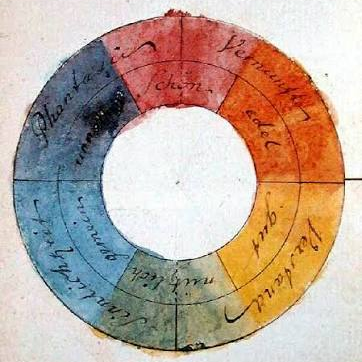
Goethe's Farbenkreis from Zur Farbenlehre
Goethe, Zur Farbenlehre

The contemporary condition often separates us into distinct tasks or roles that dissociate a human subject into economically useful parts. This does not create a coherent model of reality that an organism can use to navigate its world. Knowing that I am an organism, I maintain a belief that integration is just as important as depth. True depth comes from a deep and careful synthesis between the multiple faces worn by both the arts and sciences across seemingly disparate domains. I also understand the limits of this. Even within mathematics, it was often stated that David Hilbert was the last person who knew all of math, as math was much smaller as a field in the early 20th century. Even Guillaume de Machaut was considered the last poet bard “troubadour” in his time. Chasing your curiosity often leads me to unreasonable places, however the tasks we feel the most drawn to at any moment is a function of both the organism and its environment. If sufficient mental blockades imposed by a socio-economic structure are absent, the organism will naturally seek a more base optimization landscape.

Scientific Work

My interests lie in alternative computational models of artificial intelligence, modeling of mass social patterns, chaotic and emergent phenomena in physical and information systems, and linguistics. My research was focused on novel ways of scaling deep neural networks through neurologically inspired modularity leading to compositional generalization in visual perception systems.

I am the executive director of HuronARC, a sovereign lab and holding company built to give scientists and thinkers the freedom and infrastructure to pursue breakthrough or economically meaningful work, free from the rigid oversight of public markets and the fragmentation of modern academia. Generally, this synthesizes the spirit of how the formation of the medieval university came about and a modern technocratic rendering of guild structures.

I was a 2024 Foresight Institute Fellow in Neurotechnology.

I previously worked at the Laboratory for Integrated Brain Imaging (UofM) as a NeuroAI researcher until May 2026, where I also worked on eigenmodes and cortical surface methods in conjunction with travelling waves in addition to my work in Neural AI and functional segregation.

I am also currently a staff researcher at the Sripada Lab at the University of Michigan working on mechanistic interpretability and computational theories of cognition, where I also pursue independent work in computation and AI.

I was also Co-Founder of Myelin Neurotech, a nonprofit working on neurotechnology research. We managed to run a hacker house for one summer that ended up changing the trajectory of my life for better or worse. I still find the fortunate and unfortunate consequences of that one summer to be fascinating.

Artistic Work

I compose, and some of my work is collected in my artistic portfolio. I studied with Rodney Lister at the New England Conservatory Preparatory School, and with Paul Schoenfield, Bright Sheng, and Evan Chambers at the University of Michigan.

Black Mass

Black Mass [For Good Friday] (2024)

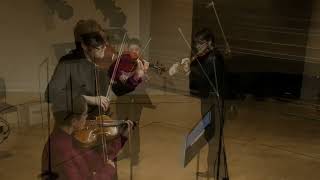
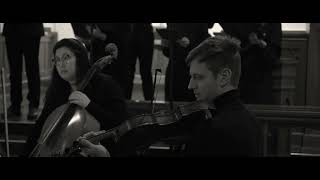
For 12-piece choir, string quartet, and piano. Premiered and commissioned by Jacob Carroll, March 2024.

The initial idea for this piece came to me when I was standing in the Detroit Institute of Art atrium containing the Diego Rivera Mural…

The initial idea for this piece came to me when I was standing in the Detroit Institute of Art atrium containing the Diego Rivera Mural. The endless depth of workers layered like a renaissance painting, the birds juxtaposed next to planes, the hands growing from mountainous rock, the human child cradling in the earth whose roots grew into the industrial instilled this profound spiritual experience where technology and nature were, to me, finally unveiled as one being. Rivera says that we are natural, and thus the instruments of our own hand are natural processes. I was entirely awestruck by this work and I couldn't help but stand in the room for 45 minutes taking it in as much as I could.

I feel that the story of creation, of crucifixion and redemption and the second coming are not linear events, but rather events that happen outside of time. It is at once the origin before time, the end of time, and also always present and happening. Every moment in time has its second coming that is always in the process of coming. If we, humans and the material reality around us, are necessarily vectors carrying out the divine will and the word (logos), then so is the second coming is wrought out of our own technology. In our technological process, we bring about both armageddon, salvation, and renewal simultaneously.

What lies in our relationship to technology is something as ancient as our mythology. What we create and claim domain over have in fact already made a permanent claim on us beforehand. What we build is set in stone in the partitions and symbolic order of our souls and psyches. That also gives theology an axiomatic truth.

And knowing this, what must have God felt when confronting the ordination that he must be sacrificed? What is on the mind of God when he enters Jerusalem? He must have sensed the past, future, and present at the same time. He must have seen Rivera's factory in the proto-original splendour. When Ecce Homo begins, the music must be both glimmering with beauty and terrifying.
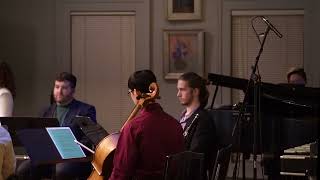
I. The Mechanical Heart · II. Blind · III. Nightscapes I · IV. Interlude · V. Ecce Homo · VI. The Second Coming

In Portbou

In Portbou (2023)

For Pierrot ensemble, electronics, mezzo, and baritone. Premiere at the Kerrytown Concert House, Ann Arbor, 18 April 2023.

Walter Benjamin was born on the 15th of July, 1892 in Berlin, then the capital of the German Empire…

Walter Benjamin was born on the 15th of July, 1892 in Berlin, then the capital of the German Empire. He dies on the 26th of September 1940 at the age of 48 by suicide after swallowing morphine tablets at a hotel in Portbou, Spain bordering France. His death represented one in over six million Jewish people who had perished during the Holocaust.

During the 48 years he was alive, his work as a literary critic and philosopher forever changed the course of European thinking. He worked within a strange syncretic intersection of ideas and disciplines still unmatched in its originality. He was a Marxist theoretician in the Frankfurt school, a Jewish mystic, a translator of French poetry, an Encyclopedist, a German literary scholar, a psychedelic writer, an experimental art radio broadcaster, and a socialite in various intelligentsia. His many friends included renowned yet disparate figures of the 20th century, from Georges Bataille, Hannah Arendt, Theodore Adorno, Bertolt Brecht, Kurt Weill, Gershon Scholem, to Kurt Godel.

This piece follows the last 7 years of Walter Benjamin's life.

I. Prologue (0:00) Pre-Death · II. Berlin 1933 (1:25) A musical collage · III. Exodus (6:05) On memory and symbols · IV. The Work of Art in the Age of Mechanical Reproduction (10:57) · V. Angelus Novus (16:56) · VI. Postlude (27:03) Post-Death · VII. Post-Life [Manhattan 1967] (28:28) Resurrection of a ghost

Flute — Jordan Smith; clarinets — Oliver Bishop; violin — Javier Fernando; cello — Terence Lo; piano — Muse Ye; mezzo-soprano — Alexia Benson; baritone — Joshua Thomas.

Education

My degrees were High Honors bachelor's degrees in Computational Cognitive Science and Music Composition from the University of Michigan, with minors in Computer Science and Complex Systems. I was awarded the Sam Epstein Award for Contributions to Theoretical Cognitive Science by the Weinberg Institute for Cognitive Science.

Languages

  • English (native)
  • Chinese (native speaking / professional fluency)
  • German (functional B1–B2)

Research

  1. Hu, X., Angstadt, M., Storks, S., Huang, Z., Taxali, A., Weigard, A., Lewis, R. L., & Sripada, C. (2026). Conflict and Congruency Effects in Large Language Models: In-Weight and In-Context Competition in a Verbal Conflict Task . arXiv:2608.11510.
  2. Huang, Z. (2025). Emerging Functional Differentiation of Multiplicatively Combined Neural Network Pathways through Contrastive Predictive Coding and Input Segregation . Undergraduate thesis, University of Michigan.

Talks

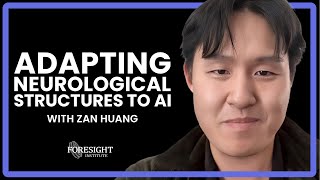
Selected talk on ongoing technical work